
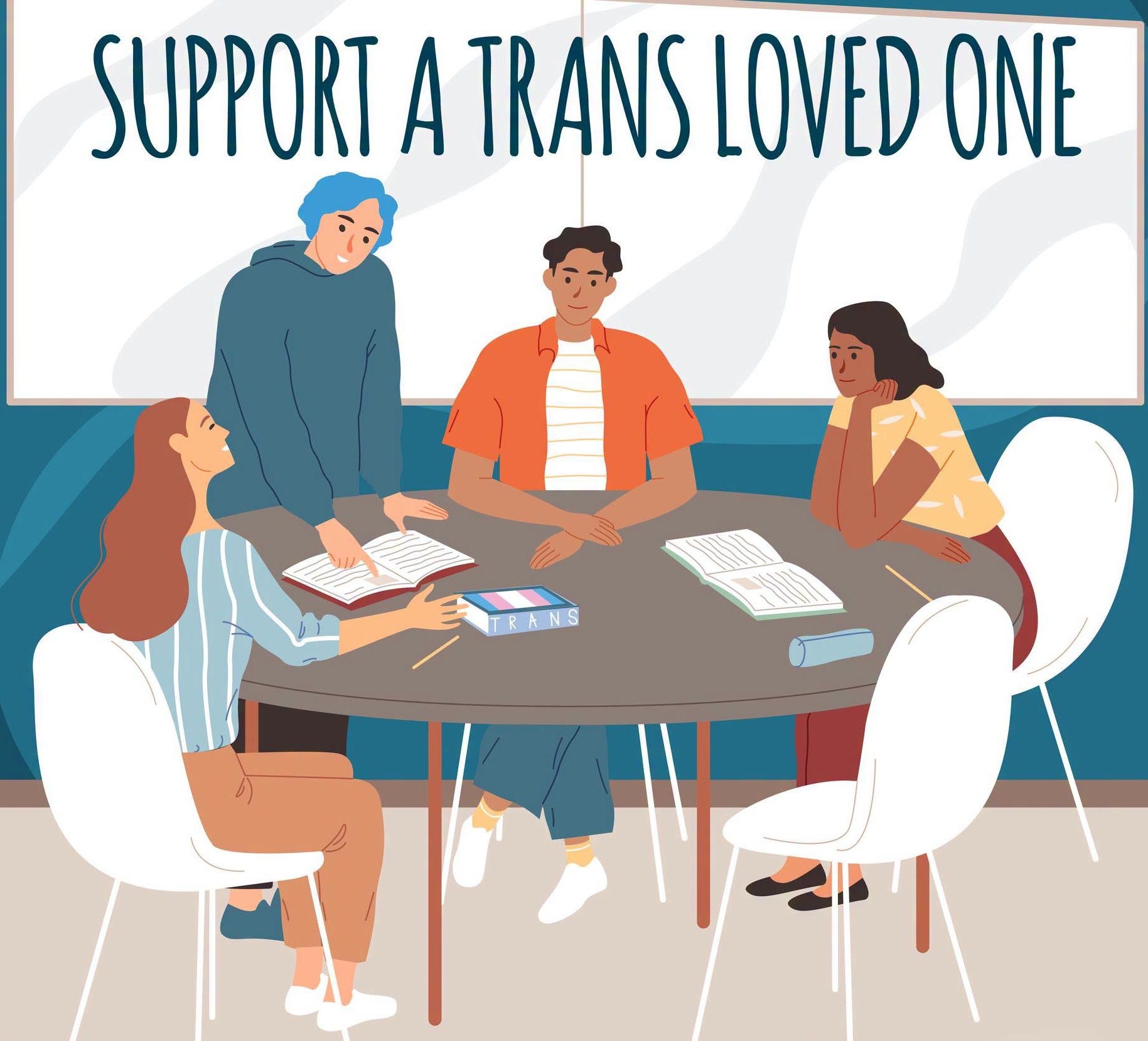
This Substack focuses on how to better support our transgender/non-binary friends. Other Substacks will discuss topics like the Church’s August 2024 increased restrictions on transgender members.
Definitions
Transgender: The term used to describe a person whose gender identity or gender expression does not match their biological sex.
Gender Dysphoria: Distress a person feels when their gender identity does not match their biological sex.
These definitions help us understand that being transgender is separate from sexual orientation. Someone can identify as transgender and consider themselves either heterosexual or homosexual—just like a cisgender person.
Neca Allgood (episode 48) helped me better understand gender dysphoria with the words of her transgender son Grayson:
Have you ever gotten carsick? Carsickness, like many other forms of motion sickness, occurs when your inner ears and your eyes disagree about whether you’re moving. Gender dysphoria is like that. Awful, nauseating, headache-inducing wrongness from the disagreement of your mind and body. And you feel it every time you wear the wrong clothes, or are called by the wrong pronoun, or hear your own voice, or someone looks at you and sees something you aren’t; every time you look in the mirror, every time you think about yourself it’s like a knife in the gut because it’s wrong wrong wrong. It’s not you but it won’t go away and it won’t stop and it hurts, it hurts like nothing you can imagine and nothing I can describe. It’s so bad that I would literally rather die than feel like that again, even for a day.
Neca adds: “Lots of times cisgender people describe gender dysphoria as a mismatch between brain and body, but that understates the reality that many transgender people experience. For my son it was distress; it was PAIN. And unlike carsickness, for four years he couldn’t get out of the car.”
The pain and distress Grayson experienced is not a condition of mental ill health. Indeed, in the latest International Classification of Diseases, called ICD-11, the World Health Organization moved transgender related issues out of the mental and behavioral disorders and into “conditions related to sexual heath” reflecting that “trans-related and gender diverse identities are not conditions of mental ill health and classifying them as such can cause enormous stigma.”
Being transgender or non-binary, isn’t a weakness to be overcome. It is how people are.
Sign of the Last Days?
Before meeting any transgender individuals, I had concluded that being transgender was a sign of the last days, of society going downhill, or of Satan’s efforts to confuse our Heavenly Parent’s children. Maybe I did this to keep myself safe from the discomfort of having to reframe my conclusions. My mindset was changed by getting to know several transgender Church members, and I echo the words of Monica Phillips (mother of a transgender son):
I don’t believe [Satan’s] work has been to deceive people into being LGBTQ. Instead, he takes these precious children of God and tells them they are worthless. He tells them that there is no place for them in God’s plan. He tells them God no longer loves them. He resides in their shame. He also resides in our fears, knowing that our fears will hinder our ability to truly love. His goal is to tear apart families and drive people away from the gospel of Jesus Christ. He is succeeding, but not because this group has been deceived and are now gay or trans. He is succeeding because he is keeping us from coming together as the body of Christ and loving with pure Christlike love. We could do better to help heal those members who are hurting and feel they have no place with us. Every member is vital—without them we cannot function as a Church to our fullest potential. The answer to overcoming Satan, strengthening family, and bringing people to Christ is LOVE.
Trap of Unearned Opinions
The “trap of unearned opinions” is the concept of forming conclusions about individuals without getting to know them—but rather from loud voices using a fear-based narrative to gain a following—something Jesus never did. I encourage us to not form opinions about a group until we have listened to many people in that group.
Historical Perspective
When it comes to our transgender friends, perhaps we don’t know everything yet. Perhaps the Church, as well as society, is still at the beginning stages of learning and understanding being transgender. There have certainly been many times in the past when society didn’t understand something and made incorrect assumptions and conclusions. Many Americans, for instance, once justified slavery because they believed black people were mentally and physiologically inferior, and women were long denied the right to vote because some believed they did not have the aptitude to make such civic decisions; we now look back on these circumstances and cringe.
With the benefit of hindsight and up-to-date knowledge, we might suppose that if we had lived during those times, we wouldn’t have made the same assumptions and mistakes as others did. As my wife and I watched the movie Harriet, I wondered, “If I had lived during her day, how I would have responded to Harriet Tubman’s heroic work of freeing slaves? Would I have supported her or fought against her?” I have also recently wondered, “If I had lived in Salem Massachusetts in 1693, with only the knowledge of that day, how would I have behaved during the Salem witch trials?” In both situations, I’m not sure I would have made what I know now to be the correct choices.
Having a historical perspective—recognizing that we don’t understand everything now and that what we don’t understand will likely become clearer later—allows us to become humbler and more teachable and curious, with a greater willingness to learn when we encounter complicated issues. Nephi, an exemplar of humility, said: “I know that [the Lord] loveth his children; nevertheless, I do not know the meaning of all things” (1 Nephi 11:17).
Elder Uchtdorf reminds us to be open to learning: “Brothers and sisters, as good as our previous experience may be, if we stop asking questions, stop thinking, stop pondering, we can thwart the revelations of the Spirit. Remember, it was the questions young Joseph asked that opened the door for the restoration of all things. We can block the growth and knowledge our Heavenly Father intends for us. How often has the Holy Spirit tried to tell us something we needed to know but couldn’t get past the massive iron gate of what we thought we already knew?”
Kathrine Switzer and the Boston Marathon
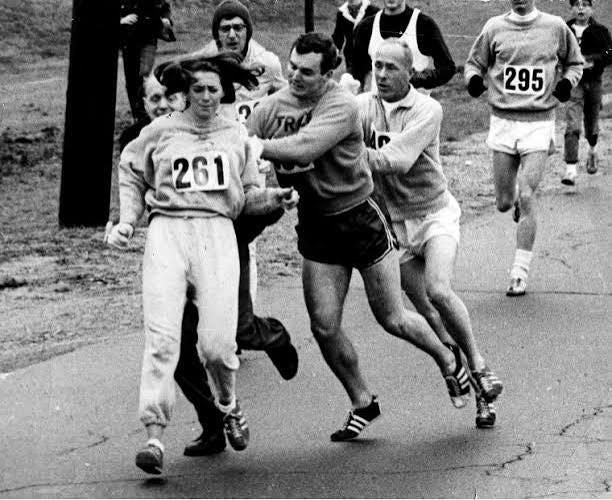
One historical example (a favorite of mine as a one-time Boston marathon runner) that showcases the need for humility so we can “get past the iron gate of what we thought we already knew” occurred in 1967, when Kathrine Switzer became the first woman to register for the Boston Marathon. Kathrine’s coach believed that marathons were too long for women to run, but he eventually agreed to take her to Boston if they ran a marathon together in a training session. In their practice marathon, they ended up running thirty-one miles, almost five miles longer than a traditional marathon. They checked the Boston marathon rule book, which said nothing about the gender of the contestants. The coach, two male athletes from Syracuse University, and Kathrine registered together to run the Boston Marathon, with Kathrine using only her initials.
In 1967, society generally assumed that women were too frail to run such a long race. Seeing Kathrine in the marathon, a race official chased her through the pack of runners, grabbed her shoulder, and attempted to rip the bib number off her shirt. He was unsuccessful, and she finished the marathon. In 2017, fifty years later, Kathrine again ran the Boston Marathon with the same bib number (261) and crossed the finish line as a celebrated finisher. At that time, Kathrine ran with thousands of other women, and no one questioned a woman’s ability to successfully complete a marathon.

What changed between 1967 and 2017? Our knowledge of a group of people—in this case, women runners—changed. Scientific research has confirmed that, indeed, women are completely capable of running marathons, and most of us today personally know a female marathon runner—and some of you may be one of these women marathon finishers.
I invite us to use this example to temper our judgment and increase our curiosity about gender dysphoria. Most of us have little direct contact with someone who experiences gender dysphoria. We don’t know which of our conclusions will turn out wrong and what we will discover tomorrow. But we do know that today’s transgender people walk a difficult road that few of us understand, and that our responsibility is to love and show compassion.
In the future, maybe we will watch a movie about today’s brave transgender people and leave with tears in our eyes. Maybe we will wish we could go back in time and better support them.
Transitioning
Many people who experience gender dysphoria undergo what is termed transitioning, in which they take steps to end their feelings of dysphoria. In my experience, Latter-day Saints who transition are not doing it out of rebellion or to engage in behavior outside the teachings of our Church; rather, they wish to end/cope with their dysphoria to feel better, whole, and complete. That said, each transgender person’s experience is unique, and some feel no need to transition.
There are three general categories of transitioning for our transgender friends. Examples of transitioning stages appear alongside each category listed below.
Social: using a different name and/or pronouns, changing their dress and grooming
Legal: legally changing their name, changing their gender marker
Medical: using hormones, undergoing sex-reassignment surgery
Some of my transgender friends identify as “nonbinary,” which means they do not identify in either of the binary categories “male” and “female.” To reflect this nonbinary identity, these individuals often use they/them pronouns. They/them pronouns are grammatically plural, but these terms are now also employed in these cases to refer to a single person.
Listening to Transgender Latter-day Saints
In addition to keeping a historical perspective, there is more we can do today to better understand our transgender friends. Just as we personally know female marathon runners, we need to get to know transgender Latter-day Saints by listening to them and hearing their stories. We have done many podcasts with transgender/non-binary Latter-day Saints. Most importantly, we should have open hearts and minds, believing that the feelings and thoughts of transgender Latter-day Saints are real and authentic.
This approach is consistent with what S. Michael Wilcox (one of my favorite Institute teachers) suggests: “In some matters, it is better to be intellectually uncertain rather than superficially sure. This will still leave us with a great deal to be certain about, while maintaining a humility to learn.”1
By striving to listen and understand, we follow the example of Jesus, who reached out to the most marginalized in society first and invited them, literally and figuratively, to His table for dinner and conversation. As we hear stories from transgender Latter-day Saints and try to walk in their shoes, we will be in a better position to help lift their burdens by showing respect, sensitivity, and understanding.
Supporting Both the Church and Our Transgender Friends
Our baptismal covenants are to bear, mourn, and comfort. As Latter-day Saints, we can listen to transgender people, call them by their preferred names and pronouns, recognize their gender identity, and love and accept them as fellow human beings. These actions cost us nothing but mean everything to them.
We also need to understand the risk of suicide for transgender Latter-day Saints and follow the words of Elder Rasband to love: “Particularly vulnerable for suicide are those youth and young single adults who struggle with gender issues. They need to be encircled in the arms of their Savior and know they are loved. So often the Lord calls on us; He expects us to be His welcoming, loving arms. We need to encourage their friends to do the same.”
I have been deeply touched by the transgender people in my life and the things they have taught me about being a better disciple of Christ. I don’t need to give up any of my beliefs in or my commitment to the restored Church to accept my transgender friends and honor their lived experiences. In fact, I believe are following in the Savior’s footsteps when we choose to love and minister to these and all LGBTQ individuals.
Love,
Richard
(New to this free Substack? Find my introduction here)
S. Michael Wilcox, Who Shall Be Able to Stand? Finding Personal Meaning in the Book of Revelation (Salt Lake City: Deseret Book, 2003), ix.
Thank you for this.
Elder Ronald A. Rasband: "Particularly vulnerable for suicide are those youth and young single adults who struggle with gender issues. They need to be encircled in the arms of their Savior and know they are loved. So often the Lord calls on us; He expects us to be His welcoming, loving arms. We need to encourage their friends to do the same."
https://www.churchofjesuschrist.org/study/broadcasts/an-evening-with-the-general-authorities/2019/02/12rasband?lang=eng
Reminds me of this scripture:
“And if men come unto me I will show unto them their weakness. I give unto men weakness that they may be humble; and my grace is sufficient for all men that humble themselves before me; for if they humble themselves before me, and have faith in me, then will I make weak things become strong unto them.” - Ether 12:27 from the Book of Mormon: Another Testament of Jesus Christ